Full disclosure: FRIDAI sells an AI DM customer service product. The templates here are not tied to any tool. You can paste them by hand, put them into LINE's or Meta's built-in features, or hand them to any AI customer service system.
A note on language: the templates stay in Traditional Chinese because they are written for customers in Taiwan, where most shop conversations happen on LINE, Instagram and Facebook. Each group has a one-line English gloss so you know what every version says.
Three principles before you use a template
Templates save typing time, not thinking time. Keep three things in mind.
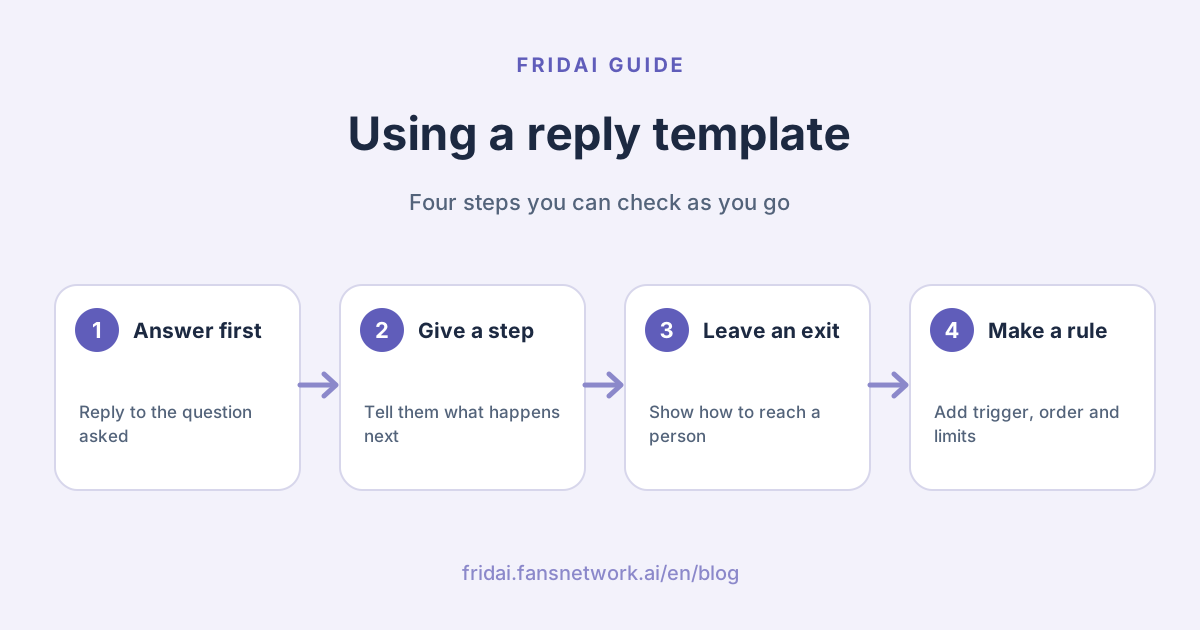
- Every reply needs an answer, a next step and an exit. Without a next step the customer has to ask again; without an exit the problem gets stuck with the machine.
- Write only what you are sure you can deliver. Stock, arrival dates, discounts and refund timing all change, so leave them as 〔 〕 placeholders to be filled from the real situation at that moment.
- Keep "received" and "done" apart. If you have only seen the message, do not say it has been handled.
This chart helps you decide whether a message should get a template, go to AI, or go straight to a person.
Tone rules: do and don't
The same sentence in the wrong tone turns customer service into a complaint. This table is the checklist we use ourselves.
| Situation | Do | Don't |
|---|---|---|
| Opening | Answer the first question directly | Paste a long self-introduction first |
| Addressing | Use "you" or the name the customer gave | Fill the message with honorifics and exclamation marks |
| Bad news | State the result, then the alternative | Take three sentences to say it is out of stock |
| Apology | Apologise once for the specific thing | Keep saying sorry with no action |
| Time | Give a clear time slot or date | Write "as soon as possible", "later", "shortly" |
| Declining | Say what you can do | Reply only "not possible" |
| Uncertainty | Say you will check and when you will reply | Guess an answer and send it |
| Closing | Give one clear next step | End with "ask me if you have questions" |
36 customer service reply templates by situation
Replace the text in 〔 〕 with your own. Each group has three versions: the first is usually the most general, and the other two handle more specific cases.
1. First greeting
Use when a customer DMs for the first time or adds you as a friend. The point is to tell them what they can ask here and how to reach a person.
English gloss: (1) a general opener listing what can be asked and the keyword for a human; (2) an opener that says this is an AI helper and who it hands over to; (3) a greeting for someone who arrived from a post comment or campaign.
【招呼 1:一般開場】
你好,這裡是〔店名〕。想問〔常見問題一〕、〔常見問題二〕或〔常見問題三〕都可以直接說,需要真人協助請輸入「找客服」。

【招呼 2:說明是自動回覆】
你好,我是〔店名〕的 AI 小幫手,可以先幫你查〔可查詢的項目〕。遇到我不確定的問題,會轉給〔負責的人〕回覆你。

【招呼 3:從留言或活動進來】
謝謝你在貼文留言!你想了解的是〔品名〕嗎?告訴我〔需要的一項資訊〕,我把適合的內容傳給你。
2. Price questions
Use when a customer asks how much something costs. Quote directly if you can; if not, say clearly what the price depends on.
English gloss: (1) a fixed price with what it includes; (2) a price range that depends on conditions, asking for two details before an exact quote; (3) sending the price list.
【詢價 1:有固定價格】
〔品名〕目前是 NT$〔金額〕,內容包含〔項目〕。要下單或預約的話,請告訴我〔數量或時段〕。

【詢價 2:價格依條件不同】
〔品名〕的費用會依〔影響價格的條件〕調整,範圍大約是 NT$〔金額〕到 NT$〔金額〕。方便告訴我〔需要的兩項資訊〕嗎?我請〔負責的人〕給你準確的報價。

【詢價 3:傳價目表】
這是目前的價目表:〔連結或圖片〕。活動價格以〔頁面或日期〕為準,你想了解哪一項,我再說明細節。
3. Stock and availability
Use when a customer asks whether something is available. If it is not, say so directly and offer an alternative.
English gloss: (1) in stock, with a deadline to hold it; (2) out of stock with an expected restock date; (3) out of stock with no confirmed date, offering a similar item instead of guessing.
【庫存 1:有現貨】
〔品名〕〔規格〕目前有現貨。要幫你保留的話,請在〔日期或時間〕前完成〔下單或付款方式〕。

【庫存 2:缺貨,有到貨時間】
〔品名〕〔規格〕目前沒有現貨,預計〔日期〕到貨,實際時間以到貨通知為準。你要先預訂,還是到貨時我再通知你?

【庫存 3:缺貨,不確定到貨】
〔品名〕目前缺貨,到貨時間還沒確定,我不先亂給日期。類似的款式有〔替代品名〕,差別在〔差異〕,要不要傳給你看看?
4. Booking and rescheduling
For booking-based services. If a person still has to confirm the slot, write "pending confirmation".
English gloss: (1) collecting date, time, party size, name and phone; (2) "received, pending confirmation" with a reply-by time; (3) rescheduling or cancelling, pointing to the shop's own policy.
【預約 1:收集預約資訊】
好的,幫你安排〔服務名稱〕。請告訴我希望的日期、時段、人數,以及預約姓名和電話。

【預約 2:已收到,待確認】
已收到你的預約需求:〔日期〕〔時段〕〔服務名稱〕。目前是待確認狀態,我們會在〔時間〕前回覆是否有空位。

【預約 3:改期或取消】
可以改期。請告訴我原本預約的姓名與日期,以及想改到的時段。取消或改期的規定是〔店家規定〕,以〔政策連結〕為準。
5. Shipping and delivery delays
Use when a customer asks where an order is, or when you know it will be late. The earlier a delay is announced, the better.
English gloss: (1) the dispatch time and how tracking is sent; (2) an order status check with an expected delivery date; (3) proactively announcing a delay, with the new date and the alternative the shop offers.
【出貨 1:說明出貨時間】
訂單會在付款後〔天數〕個工作天內出貨,出貨後會傳〔物流查詢方式〕給你。訂單編號是〔編號〕。

【出貨 2:查詢進度】
幫你查了,訂單〔編號〕目前的狀態是〔狀態〕,預計〔日期〕送達。如果到〔日期〕還沒收到,請再跟我說,我們直接幫你追。

【出貨 3:主動告知延遲】
很抱歉,你訂的〔品名〕因為〔原因〕會比原定晚出貨,新的預計出貨日是〔日期〕。如果你不想等,可以〔店家提供的替代方案〕,請回覆告訴我你的選擇。
6. Returns, exchanges and refunds
Use when a customer wants to return or exchange. Write in your own policy; the legal part is covered in a later section.
English gloss: (1) explaining the process and linking the policy; (2) a defective item, asking for photos and the order number; (3) a refund status update that leaves bank timing to the payment provider.
【退換貨 1:說明流程】
可以的,我先說明流程。請提供訂單編號和想退換的原因,申請方式是〔步驟或連結〕。完整規定在〔退換貨政策連結〕。

【退換貨 2:商品有瑕疵】
很抱歉讓你收到有問題的商品。請拍下〔需要的照片〕並附上訂單編號,我們確認後會以〔店家提供的處理方式〕處理,預計〔時間〕內回覆你。

【退換貨 3:退款進度】
你的退款申請已在〔日期〕收到,目前狀態是〔狀態〕。退款會退回〔原付款方式〕,入帳時間依〔金流或銀行〕作業而定,我這邊一有更新就通知你。
7. Complaints and apologies
Use when a customer is unhappy. Acknowledge the specific thing first, then say what you will do and when you will reply.
English gloss: (1) intake only: apologise for the experience and say who will reply by when; (2) confirmed shop error, with the remedy and a date; (3) still investigating, asking for evidence and promising a reply time instead of a guess.
【客訴 1:先收件】
謝謝你告訴我們,這件事讓你不舒服,很抱歉。我已經把你的訊息轉給〔負責的人〕,會在〔時間〕前由專人回覆你,不會讓你重講一次。

【客訴 2:確認是店家的問題】
這次是我們的疏失:〔具體發生的事〕。很抱歉。我們會〔店家提供的補救方式〕,並在〔日期〕前完成,完成後再跟你確認。

【客訴 3:還在釐清原因】
我了解你的意思,也想把事情弄清楚再回你,不想隨便給你一個答案。可以請你提供〔訂單編號或照片〕嗎?我們會在〔時間〕前回覆查到的結果。
8. Out of hours
Use after closing, on days off or during holidays. Tell the customer when someone will reply.
English gloss: (1) ordinary after-hours reply asking the customer to leave details; (2) a multi-day closure notice; (3) what to do for urgent cases, as defined by the shop.
【非營業 1:一般打烊】
現在是非營業時間,我們會在〔下一個營業時段〕回覆你。可以先留下想問的事和〔訂單編號或聯絡電話〕,上班後依序處理。

【非營業 2:連假或店休】
〔日期〕到〔日期〕店休,〔日期〕恢復回覆。這段期間的訊息我們都會看到,恢復營業後依序回覆。

【非營業 3:急件】
現在沒有真人在線上。如果是〔店家定義的急件〕,請〔店家提供的緊急聯絡方式〕;其他問題請留言,我們〔時間〕回覆你。
9. Handing over to a human
Use when AI or auto-reply cannot handle it. Tell the customer it has been passed on, how long the reply will take and what to prepare.
English gloss: (1) a general handover with an expected reply time; (2) declining to guess on a question that needs a specialist; (3) the first line from the person taking over, restating the problem so the customer does not repeat it.
【轉真人 1:一般轉接】
收到,已通知真人客服。營業時間內大約〔時間〕內回覆。為了加快處理,請先留下問題內容和〔訂單編號或預約姓名〕。

【轉真人 2:需要專人判斷】
這個問題需要〔負責的人〕確認,我先不亂回答。請留下〔需要的資訊〕,會由負責的人直接回覆你。

【轉真人 3:真人接手後的第一句】
你好,我是〔稱呼〕,前面的對話我都看過了。你的問題是〔重述問題〕,對嗎?我先幫你〔下一步〕。
10. Following up
Use when a customer goes quiet after asking, or to check in after a service. One or two follow-ups per conversation is enough.
English gloss: (1) checking in after a quote, with an easy way to say no; (2) a booking reminder; (3) a check-in after delivery or service.
【跟進 1:報價後沒回覆】
想跟你確認一下,剛剛提到的〔品名〕還需要嗎?〔優惠或保留〕到〔日期〕為止。不需要也沒關係,回我一聲就好。

【跟進 2:預約前提醒】
提醒你,〔日期〕〔時段〕有預約〔服務名稱〕,地址是〔地址〕。需要改期請直接回覆這則訊息。

【跟進 3:收貨或服務後關心】
〔品名〕收到了嗎?使用上有任何問題都可以直接在這裡問我,我們會幫你處理。
11. Declining a discount
Use when a customer bargains. Decline the price, but offer an option you really have.
English gloss: (1) no discount, with a lower-priced alternative; (2) no change on a single item, pointing to an existing offer and its conditions; (3) bulk orders get a separate quote from the person in charge.
【婉拒 1:沒有折扣】
謝謝你的詢問。這款目前沒有折扣,價格是 NT$〔金額〕。如果預算是考量,〔替代品名〕是 NT$〔金額〕,差別在〔差異〕。

【婉拒 2:說明現有優惠】
單件沒辦法再調整價格,不過目前有〔店家現有的優惠〕,條件是〔條件〕,期限到〔日期〕。要不要幫你算算看?

【婉拒 3:大量訂購】
數量〔數量〕以上的訂單可以另外報價,我請〔負責的人〕跟你確認。方便留下數量、需要的日期和聯絡方式嗎?
12. Asking for a review
Use after a transaction went smoothly. Invite only; do not trade for it, and do not pick who gets asked.
English gloss: (1) a general invitation asking for honest feedback, good or bad; (2) an invitation after a service, with a way to send criticism privately; (3) a reply when the customer praises you first.
【評價 1:一般邀請】
謝謝你這次選擇〔店名〕。如果方便的話,歡迎到〔評價平台連結〕留下你的真實感受,好的不好的我們都想知道。

【評價 2:服務後邀請】
今天的〔服務名稱〕還滿意嗎?你的回饋能幫我們做得更好,評價連結在這裡:〔連結〕。有需要改進的地方,也可以直接回這則訊息告訴我。

【評價 3:客人主動稱讚時】
聽你這樣說我們很開心!如果願意,可以把這段話貼到〔評價平台連結〕,讓其他客人也能參考。謝謝你。
The legal floor for return and exchange templates in Taiwan
Returns are the group most easily written wrong, because they are not only shop policy but also law. What follows only quotes the articles in Taiwan's official Laws and Regulations Database and is not legal advice; for how it applies to you, check with the competent authority or a professional.
- Article 2 of the Consumer Protection Act (消費者
保護法) defines a distance transaction (通訊 交易) as a contract concluded between a business operator and a consumer by methods such as the internet, where the consumer could not inspect the goods or services. - Article 19 of the same act provides that a consumer in a distance transaction may, within seven days after receiving the goods or the service, rescind the contract by returning the goods or by written notice, without giving a reason and without bearing any cost or price; this does not apply where the distance transaction falls under a reasonable exception.
- Article 19 also states that any agreement made in violation of the article is void. So a line like "all sales final, no returns" (售出
概不 退換) is not something to drop straight into a reply template for distance sales. - If the business operator has not provided the information on rescinding the contract as required, the seven-day period runs from the day after it is provided, but the right lapses once four months have passed.
The reasonable exceptions are listed in a regulation set by the Executive Yuan (Taiwan's cabinet), the Regulations for Application of Reasonable Exceptions to the Right of Rescission in Distance Transactions (通訊
- Goods that spoil easily, have a short shelf life, or are about to expire at the time of rescission.
- Customised goods or services made at the consumer's request.
- Newspapers, periodicals or magazines.
- Audio-visual products or computer software unsealed by the consumer.
- Digital content not supplied on a tangible medium, or online services completed once provided, supplied only after the consumer's prior consent.
- Unsealed personal hygiene products.
- International air passenger services.
In practice this means: if you sell cakes, custom items or anything else that may fall under an exception, say so clearly before the customer orders, not after a problem appears. Whether your items count as an exception, or whether a hand-over in person counts as a distance transaction, is not something this article decides for you. Go by the articles and your own policy.
Follow-ups and proactive messages: check the platform rules first
The "following up" templates cannot be sent whenever you feel like it.
- Meta's Messenger Platform policy explains that a customer's message opens a 24-hour standard messaging window, and that the policy applies to the Messenger Platform and the Instagram Messaging API. To message after the window you need a message tag for an approved use case. So a follow-up in Instagram DMs is best finished within 24 hours of the customer's last message.
- The same policy says that where the law requires it, automated chats must disclose that the customer is interacting with an automated service, and recommends disclosure even where it is not required. Greeting template 2 above exists for exactly this.
- LINE's official 2026 price announcement lists one-to-one chats and auto-response messages as not billed, while the pricing page on LINE Developers states that push and broadcast messages count toward the quota. A proactive follow-up sent as a push uses your allowance.
For platform details, see Instagram auto-reply: built-in features and tools compared and LINE auto-reply setup and examples.
How do you turn templates into AI rules instead of pasting them in?
Paste all 36 templates into an AI customer service tool and the usual result is the AI saying the right sentence at the wrong moment. A template is "what to say". A rule is "when to say it, what to confirm before saying it, and when it must not be said".
| In the template | Rewrite as a rule | Why |
|---|---|---|
| Fixed sentences | Tone examples, not lines to recite | The AI can adapt to context |
| 〔 | Name the knowledge note to read from | Stops the AI inventing numbers |
| No answer found | Send intake reply, then hand to a person | Stops the AI guessing |
| Refunds, complaints | List as always-hand-over situations | A wrong answer costs a lot |
| Follow-up messages | State a maximum count and a stop condition | Keeps it from becoming harassment |
One template rewritten as a rule looks roughly like this:
Rule: out-of-stock enquiry
Trigger: the customer asks whether an item is available, and the knowledge note marks it as out of stock.
Order of handling:
1. Say directly that it is not in stock right now.
2. Give a restock date only if the knowledge note has one; otherwise say the date is not confirmed.
3. Offer one alternative from the same category and explain one difference.
Boundaries: never estimate a restock date, never promise a hold or a discount.
Done when: the customer chooses to pre-order, wait for a notice or see the alternative; if none, close politely.
Tone examples: see 庫存 2 and 庫存 3.The full six-part method and three real cases are in how to write AI customer service rules. To see where each of these replies sits in a full sales flow, read the conversational commerce guide.
Common pitfalls and how to avoid them
- A template that still carries another shop's policy. Fill in every 〔 〕 before copying, and delete any line you cannot fill.
- An apology template used where no apology is due. While responsibility is unclear, use complaint template 3 and do not admit a shop error first.
- One "we will reply later" for every situation. Customers want a time, not "later".
- Review invitations sent only to people who look satisfied. Reviews gathered that way tell you nothing, and you should also check the review platform's own rules.
- Templates not updated for half a year. When prices, hours or policies change, name one person to go back through all of them.
- Treating templates as the whole of customer service training. Templates teach sentences; exceptions still take people.
FAQ
Can I copy and paste customer service reply templates as they are?
Yes, but first replace the 〔 〕 placeholders with your real details and confirm every line is something the shop can do. Do not hard-code prices, arrival dates or refund timing, or the template soon turns into a wrong promise.
Should a complaint reply start with an apology? Is that admitting fault?
You can apologise for the customer's bad experience and say you will handle it; that is different from admitting responsibility. While responsibility is unclear, use the intake and investigation templates, and explain whose problem it was and the remedy once confirmed.
Do online sellers in Taiwan have to offer seven-day returns?
Article 19 of Taiwan's Consumer Protection Act lets a consumer in a distance transaction rescind the contract within seven days of receiving the goods, with seven reasonable exceptions set by the Executive Yuan that the seller must have told the consumer about. Check the articles and the authority's guidance for your products.
Can I follow up in Instagram DMs a few days later?
Meta's policy says a customer's message opens a 24-hour standard messaging window, and messaging after it requires a message tag for an approved use case. So finish follow-ups inside the window, and otherwise wait until the customer writes again.
Why does my AI still sound stiff after I pasted in templates?
Because templates tell it what to say, not when to say it or what to do when information is missing. Rewrite them as rules with a trigger, an order of handling and boundaries, and treat the sentences as tone examples; replies become far more natural.
Do I need a separate set of scripts for each platform?
The content can be shared; length and format need adjusting. LINE works well with menus and keywords, while Instagram DMs suit short sentences finished inside the messaging window. Write one shared draft first, then trim it per platform.
How FRIDAI can help
Templates solve "how to say it". When a customer phrases things differently, or a conversation takes three questions to finish, templates stop coping. FRIDAI Chat connects to your LINE, Instagram and Facebook DMs, replies based on the AI rules and knowledge notes you write, and notifies a person to take over for complaints or anything that needs judgment. The 36 templates in this article are a very good first draft of those rules.
- DM customer service: FRIDAI Chat
- Rule writing: How to write AI customer service rules
- Sales flow: What is conversational commerce
- Automation basics: What is social media automation
- Instagram: FRIDAI on Instagram
- Threads: FRIDAI on Threads
- Facebook: FRIDAI on Facebook
Official sources
- Laws and Regulations Database of the Republic of China (Taiwan): Consumer Protection Act, Article 2: law.moj.gov.tw/
LawClass/ LawSingle.aspx?pcode=J0170001&flno=2 - Laws and Regulations Database of the Republic of China (Taiwan): Consumer Protection Act, Article 19: law.moj.gov.tw/
LawClass/ LawSingle.aspx?pcode=J0170001&flno=19 - Laws and Regulations Database of the Republic of China (Taiwan): reasonable exceptions to the right of rescission in distance transactions: law.moj.gov.tw/
LawClass/ LawAll.aspx?pcode=J0170012 - Meta: Messenger Platform Policy Overview: developers.facebook.com/
docs/ messenger-platform/ policy/ policy-overview - LINE official announcement: 2026 Official Account plan price adjustment: tw.linebiz.com/
column/ LINEOA-2026-Price-Plan/ - LINE Developers: Messaging API pricing: developers.line.biz/
en/ docs/ messaging-api/ pricing/