Full disclosure: this article is written by FRIDAI, and FRIDAI Chat is one of the AI customer service tools mentioned. The conversation scenarios are illustrative examples, not real customer cases, and everything said about LINE, Meta and Taiwan law comes from official pages FRIDAI Editorial read today.
A note on context: this is the lodging article in FRIDAI's industry series, written for B&Bs (民宿, a registered home-stay category in Taiwan), small hotels, hostels and campsites in Taiwan. LINE is Taiwan's default chat app, and a LINE Official Account (LINE OA) is its business side. Prices are in New Taiwan dollars (NT$) unless marked otherwise. You clean rooms by day and wait for late arrivals by night, while messages come in at all hours. This article covers one thing: which messages you do not have to answer yourself. The layout matches the beauty salon and restaurant articles, so they can be read side by side.
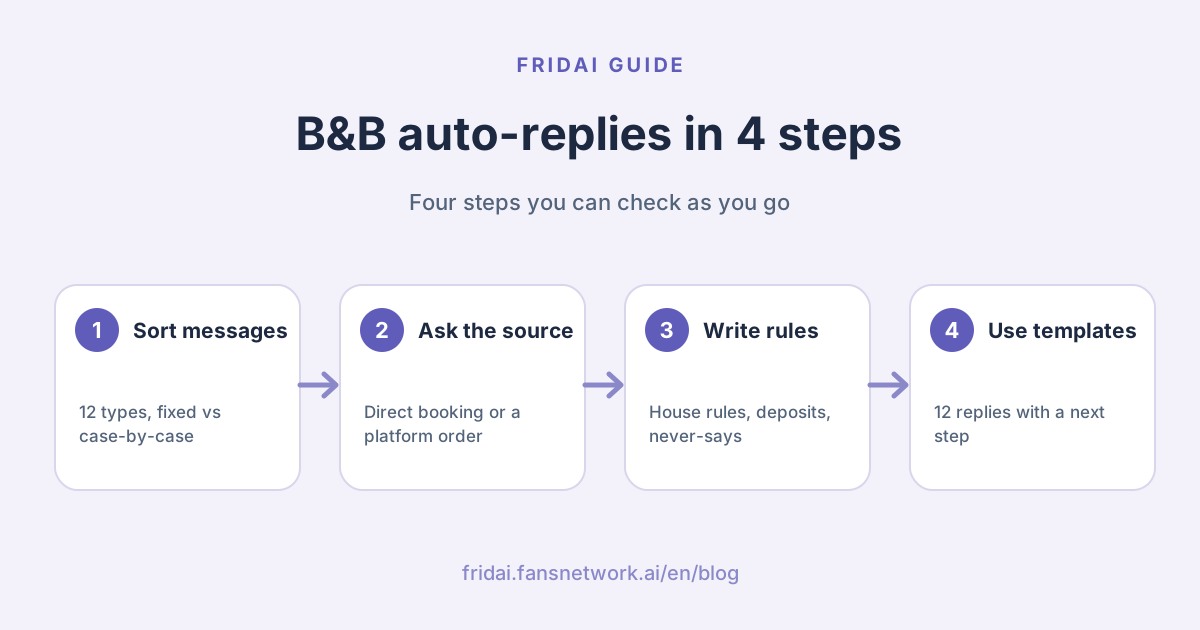
What twelve kinds of messages does a lodging business get?
Sort the messages first; then you can see which ones to hand off. The quoted lines are illustrative examples.
- Availability and rates: "Is a double room free on October 10? How much?"
- Check-in, check-out and late arrival: "Can I arrive at 11 pm?"
- Deposit and cancellation: "How do I pay the deposit? Is it refundable?"
- Parking and transport: "Is there parking? How do I get there from the station?"
- Breakfast and facilities: "Is breakfast included? Is there a washing machine?"
- Pets and children: "Can I bring my dog? Do children count as guests?"
- Extra beds: "Can you add a bed? What does it cost?"
- Luggage storage: "Can I leave my bags until the afternoon after check-out?"
- Foreign-language inquiries: "Do you have a room for two nights?"
- Lost items: "I think I left my charger in the room."
- Noise or cleanliness complaints: "Next door is loud." "There is hair in the bathroom."
- Typhoon cancellations: "A typhoon is coming. Can I cancel?"
The first few have the same answer every day. The last few involve money, orders and emotions. That is where the line goes.
What can be automated, and what must go to the host?
FRIDAI Editorial uses one test: if the answer can be written down and is the same for every guest, automate it. If it depends on the booking system, on where the order came from, or on what is happening on site, the auto-reply only takes the message in and says how long the wait will be.
| Message type | Automate? | What the auto-reply does | When a person takes over |
|---|---|---|---|
| Availability and rates | Partly | Collects dates, guests, room type | Confirming rooms and quoting |
| Check-in and late arrival | Yes | Gives times and late check-in steps | Later than your stated limit |
| Deposit and cancellation rules | Partly | States your published rules | Actual refunds and any dispute |
| Parking and transport | Yes | Gives address, spaces and route | Almost never |
| Breakfast and facilities | Yes | Gives serving hours and equipment | Special dietary needs |
| Pets, children, extra beds | Yes | Gives the rules and surcharges | Cases the rules do not cover |
| Luggage storage | Yes | Gives storage hours and place | Valuables or overnight storage |
| Foreign-language inquiries | Partly | Answers fixed facts in the guest's language | Orders, payment and refunds |
| Date change on a booking | No | Collects order details and new dates | Every single one |
| Lost items | Partly | Collects item details and room number | After staff have looked |
| Complaints and incidents | No | Apologises, collects details, states the wait | All of them |
| Typhoon cancellation | No | Collects order details, alerts the host | All of them |
"Partly" means the AI can explain the rules and collect the details, but the final "that night is free, I will hold it" or "your deposit will be refunded" needs both a reliable basis and the authority to say it.
Booking-platform orders deserve a separate warning. If a guest booked through a platform such as Booking.com or Agoda, payment, cancellation and refunds usually follow the platform and the terms of that specific order. The AI does not know those terms, so it does one thing: ask where the order came from and its number, ask the guest to check the order terms on the platform, and notify you.
How should a booking inquiry be routed? One flowchart
The key is to ask first whether there is an order, then where the order came from. Both answers decide who replies.
The "live availability" box depends on where your room inventory lives. If it sits only in your notebook or in a platform back office, the AI should not answer whether a room is free. When one room is sold in three places, the last thing you need is a fourth place saying yes.
How do you write house rules and knowledge for the AI?
How well the AI answers depends mostly on what you give it. The full method is in How to write AI customer service rules; this section covers only what is specific to lodging.
Room types and rates: write the list price, not "roughly"
Write each room type's guest limit, weekday and holiday price, and the fees for extra guests and extra beds as plain text. For prices that move with the date, write "as shown on the booking page" and attach the booking link. Do not let the AI calculate discounts or multi-night offers by itself.
Check-in, check-out and late arrival: state the latest time
Check-in and check-out times, the latest possible check-in, how a late guest gets the key, and whether early arrivals can leave luggage should all be written as exact times. "A bit late is fine" will be read literally, and 3 am is "a bit late" to someone.
Deposit and cancellation: only the version you publish
Paste in the deposit ratio, payment method, and cancellation and date-change rules exactly as you publish them. Do not write a second, chattier version. When two texts disagree, the guest always remembers the one that favours them. Deposits and refunds on direct bookings have a regulatory baseline, covered in its own section below.
What the AI must never promise
Write the prohibitions as rules. Do not expect the AI to sense where the line is. The template below stays in Chinese because it is pasted into a Chinese-language setup; in short, it lists basics, room types and fees, deposit and cancellation, what always goes to a person, and what must never be said.
【旅宿知識與規則範本】(括號內換成你的內容)

一、基本
名稱與登記證編號:(名稱)(編號)
地址與交通:(地址、最近的車站、接駁方式)
停車:(車位數、是否預約、費用)
入住:(時間)起,退房:(時間)前,最晚入住:(時間)

二、房型與費用
(房型)|(人數上限)|(平日價)|(假日價)
加人或加床:(費用與上限)
早餐:(供應時間與內容),設施:(逐項列出)
寵物:(可否、費用、限制),兒童:(計費方式)

三、訂金與取消
訂金:(比例或金額),付款方式:(方式),期限:(幾小時內)
取消與改期:(貼上你對外公告的規定全文)

四、一定轉真人
退費與取消爭議、已成立訂單改期、颱風或天災取消、
客訴、受傷或財物損失、透過訂房平台成立的訂單、
價目上沒有的需求(包棟、活動、長住)

五、不可以說
不確認空房、不保留房間、不自行報價或給折扣
不答應退款、不說可以免費取消或改期
不解釋或更改訂房平台的訂單條款
不保證天氣、景觀、安靜程度或交通時間
Why "never guarantee how quiet it is"? Because guests treat "very quiet" as a promise. On the day the neighbours hold a wedding banquet, that sentence becomes your complaint.
12 copy-ready reply templates for lodging
Replace the text in brackets with your own. Each one contains three things: the answer, the next step, and how to reach a person. They can go into LINE's auto-response messages or serve as example replies for an AI. The templates stay in Chinese because your guests read Chinese; each has a one-line English gloss. Other template types are indexed in Customer service message templates.
First message
Gloss: greets the guest, asks for dates, guests and room type, and asks existing bookers for their name and order source.
你好,這裡是(名稱)。
想訂房的話,請告訴我:入住與退房日期、人數、想要的房型。
想先看房型與價格,輸入「房型」。
已經有訂單的旅客,請提供訂房姓名與訂單來源,我們會請管家回覆。
Availability and rates
Gloss: says the host must confirm availability, collects the details, gives a reply time and the booking link.
謝謝詢問(日期)的住宿。
房況需要由管家確認,我先幫你登記:
入住與退房日期:
人數(大人/小孩):
房型:
(時間)前會回覆你是否有房與金額。也可以直接到訂房頁面查看:(連結)Check-in, check-out and late arrival
Gloss: gives the times, the latest check-in, what to do if later, and early luggage drop-off.
入住時間:(時間)起,退房時間:(時間)前。
最晚入住時間是(時間)。如果會晚於這個時間,請提前告訴我們預計抵達時間,
管家會回覆你入住方式。
提早抵達可以先寄放行李:(時段與地點)。
Deposit and cancellation rules
Gloss: states the deposit, payment deadline and your published rules, and says the host calculates any actual refund.
訂房需先付訂金(比例或金額),付款方式:(方式)。
請在(幾)小時內完成並回傳(末五碼/截圖),由管家確認後訂房才算成立。
取消與改期規定:(貼上你公告的規定)
實際退費金額會由管家依規定計算後回覆你。
Booking confirmation
Send this one only after a person has confirmed both the payment and the room. Gloss: confirms deposit received, dates, room, total, balance, address and contact number.
已收到你的訂金(金額),訂房成立。
入住:(日期)(時間)起,退房:(日期)(時間)前
房型與人數:(房型)(人數)
房價總額:(金額),尾款:(金額)(付款方式)
地址:(地址),入住當天聯絡電話:(電話)
Parking and transport
Gloss: address, driving and parking notes, public transport route, and a phone number if lost.
地址:(地址)
開車:(導航關鍵字),車位:(數量與是否需預約)
大眾運輸:(車站)出站後(走法或接駁方式)
找不到路可以撥打(電話)。
Pets, children and extra beds
Gloss: states the pet policy, child pricing and extra-bed rules, and routes anything else to the host.
寵物:(可否入住、體型或數量限制、清潔費)
兒童:(幾歲以下不佔床免費/加收費用)
加床:(可否、每床費用、哪些房型可以加)
有上面沒寫到的情況,請直接告訴我,我請管家回覆。Pre-arrival reminder
Gloss: reminds the guest of tomorrow's check-in, times, address, parking and what to bring.
(稱呼)你好,提醒你明天入住(名稱)。
入住時間:(時間)起,最晚入住:(時間)
地址:(地址),停車:(說明)
請攜帶(證件/其他)。預計抵達時間有變動,請先告訴我們。Foreign-language inquiry
This one is already in English; adapt it for other languages. Order and refund questions still go to a person.
Hello, this is (名稱).
Check-in is from (時間), check-out is by (時間).
To check availability, please send your dates, number of guests and room type.
Our host will confirm availability and price by (時間).
If you booked through a booking platform, please tell us the platform and booking number.Platform order wanting to change or cancel
Gloss: explains that changes, cancellation and refunds follow that order's terms on the platform, asks for name and order number, and says the host will reply.
收到你的需求。
你的訂單是透過(平台)成立的,改期、取消與退費需依平台上該筆訂單的條款處理。
請先查看平台訂單頁面的取消規定,並告訴我訂房姓名與訂單編號。
我已經通知管家,(時間)前會回覆你可以怎麼處理。
Noise or cleanliness complaint
Gloss: apologises, asks for room number, the situation and a photo, and says staff will contact the guest and come on site.
很抱歉造成你的困擾。
請告訴我房號與目前的狀況,方便的話拍一張照片。
我已經通知管家,(時間)內會有人跟你聯絡並到現場處理。
Typhoon or natural-disaster cancellation inquiry
Gloss: says weather-related cancellation is handled by the host under the booking rules, and collects name, date and order source.
收到,謝謝你提前詢問。
天候影響下的取消與改期,需要由管家依實際狀況與訂房規定處理。
請提供訂房姓名、入住日期與訂單來源,(時間)前會回覆你。
Once they are written, send each of the 12 to yourself as a guest would, especially the one that arrives at midnight.
LINE, Instagram or the booking platform as the main channel?
Lodging messages usually come from three places: the LINE Official Account, Instagram and Facebook DMs, and the booking platform's own inbox. Decide which one is where direct bookings are made; the others only answer and point the way.
| Criterion | LINE Official Account | IG and FB DMs | Booking platform inbox |
|---|---|---|---|
| How guests arrive | Add as friend, then message | DM after seeing photos | After ordering on the platform |
| Best used for | Direct bookings, reminders | Room questions and offers | That platform order only |
| Auto-reply | Keyword auto-response | Depends on your tool | Depends on the platform |
| Main limit | Capped number of keywords | Reply window through the API | The platform's terms |
Facts FRIDAI Editorial confirmed on official pages today:
- LINE's official manual states that auto-response keywords are capped at 51, that emoji cannot be keywords, that matching ignores upper and lower case and full-width versus half-width characters, and that a sending period can be set by date or time.
- Meta's developer policy page states that a business has up to 24 hours to respond after a user messages; there is also a Human Agent tag that lets a person reply manually within 7 days. What you can actually use depends on Meta and on the tool you connect.
FRIDAI Editorial's suggestions:
- Mostly domestic guests: make LINE the main channel, with a rich menu showing "Rooms", "Getting here" and "House rules".
- Guests find you through photos: let Instagram DMs answer room and facility questions and send people to the booking link when it comes to booking. For choosing a tool see Instagram auto-reply tools; for the whole path from inquiry to sale see Conversational commerce.
- Many foreign guests: FRIDAI Chat's product page states that it supports more than 100 languages and detects the language automatically, and its supported platforms include WhatsApp. Orders, payment and refunds still go to a person in any language.
Deposits, refunds and registration are all regulated
Read this part carefully. FRIDAI Editorial is not a lawyer. What follows quotes only what Taiwan's Tourism Administration law site and the national Laws and Regulations Database showed today; for how it applies to a specific case, ask your local tourism authority or a lawyer.
The deposit cap and the refund tiers
The Ministry of Transportation and Communications' mandatory provisions for individual guest room bookings (個別
Point 5 sets the baseline when the guest cancels, depending on whether you took a deposit or the full price:
| Cancellation notice arrives | Deposit taken: refund | Full price prepaid: refund |
|---|---|---|
| 14 or more days before the stay | 100% of deposit | 100% |
| 10 to 13 days before | 70% of deposit | 100% |
| 7 to 9 days before | 50% of deposit | 100% |
| 4 to 6 days before | 40% of deposit | 100% |
| 3 days before | 30% of deposit | 100% |
| 2 days before | 30% of deposit | 50% |
| 1 day before | 20% of deposit | 50% |
| Same day, or no notice | Operator may keep it | Operator may keep it |
Where the full price was prepaid, the provisions also allow an alternative to proportional refunds: keeping the amount paid as credit for use within one year.
Several other points bear directly on how you reply:
- Point 6: if the guest asks to change the dates, number of nights, room type or number of rooms and the operator agrees, the guest pays no fee arising from the change.
- Point 8: if the booking cannot be honoured for reasons attributable to the operator, the guest may claim damages of one time the total room price, or three times where it was intentional.
- Point 9: if the contract cannot be performed because of force majeure or other causes not attributable to either party, the operator must return all deposits and other fees paid, without interest, at once.
- The prohibited terms include excluding the guest's right to cancel or terminate, and stating that advertising is "for reference only".
Whether a given typhoon falls under point 9 depends on the actual situation at the time, which is exactly why the AI should not answer that question by itself.
What changed in 2026: platform bookings are covered too
In an interpretation dated August 19, 2026 (ROC year 115; reference 觀宿字第 1150918092 號), the Tourism Administration explained that guests who book indirectly through a third-party platform with a lawful tourist hotel, hotel or B&B in Taiwan are also covered by these provisions. So "you booked on a platform, it is not our business" is not a safe answer. The steadier approach: the AI does not interpret terms, collects the order details and hands them to you, and you work it out against both the platform's terms and the provisions.
The consequences are on record too. Article 17 of the Consumer Protection Act says standard-contract terms that violate the announced provisions are void; Article 56-1 sets a fine of NT$30,000 to NT$300,000 for a business that is ordered to correct by a deadline and does not.
Registration and room prices
- Articles 24 and 25 of the Act for the Development of Tourism (發展
觀光 條例) require both hotel operators and B&B operators to apply for registration with the local authority and receive a registration certificate and official sign before operating. Article 55 sets a fine of NT$100,000 to NT$1,000,000, plus an order to cease business, for running a B&B without a registration certificate. - Article 25 of the Regulations for the Management of Home Stay Facilities (民宿
管理 辦法) says room list prices are set by the operator and filed with the local authority, and actual charges may not exceed the list price. That is one more reason not to let the AI quote on its own. - Article 28 of the same regulations says guest details must be recorded daily and kept for six months, and their collection and use must comply with the Personal Data Protection Act.
Campsites are not among the three kinds of operator named in the preamble of the provisions. FRIDAI Editorial did not read any campsite-specific rule today, so we draw no conclusion; please confirm the applicable rules with your local authority.
FAQ
How much does AI customer service for a B&B cost per month?
It depends on the kind. Keyword auto-response is built into a LINE Official Account. Third-party AI customer service charges a platform fee; FRIDAI's official materials list the Chat Launch plan at US$70 a month with 500 replies, one plan per platform account.
Can the AI answer directly whether a room is available?
Only if it can see live availability. If inventory sits only in your booking system or a platform back office, the AI should collect dates, guests and room type, then send the guest to the booking link or hand over to the host. Answering from memory is how double bookings start.
A guest wants to cancel. Can the AI say how much of the deposit comes back?
Not recommended. There is a published baseline for direct bookings, but someone first has to confirm the order source, the day the notice arrived and whether you took a deposit or the full price. The AI can state your published rules; a person calculates the amount.
A guest booked through a platform and DMs to change dates. What now?
Collect the booking name, platform and order number, ask the guest to check the order terms on the platform, then alert a person. The Tourism Administration's August 2026 interpretation says bookings made through third-party platforms with lawful lodging in Taiwan are also covered by the booking provisions.
Why do guests still phone after I set up auto-replies?
Usually because the reply has no next step, or the information is stale. Check that every reply says what to do next, then confirm that check-in times, parking and transport details are current, especially before a long weekend.
Can the AI reply to foreign guests in their language?
FRIDAI Chat's product page states that it supports more than 100 languages and detects the language automatically. Replying in another language is not the same as handling an order, though: messages about payment, cancellation and refunds should still go to a person.
Does a B&B with three or four rooms need AI customer service?
Not necessarily. With few messages and fixed questions, LINE's built-in keyword auto-response plus a rich menu is enough. Consider AI once late-night messages and foreign-language inquiries pile up, or you cannot keep up with both LINE and Instagram.
How FRIDAI can help
FRIDAI Chat connects to your LINE Official Account, Instagram or Facebook, answers questions about house rules, directions and policies from the AI rules and knowledge notes you write, and notifies a person to take over when a refund, a date change, a complaint or a platform order comes in. The product page states that every plan includes a booking and reservation system, human collaboration and human review; whether that fits your booking process is best tested during the trial. It will not confirm availability it cannot see, and it will not promise a refund on your behalf.
- DM customer service: FRIDAI Chat
- Comment engagement: FRIDAI Social
- Rule writing: How to write AI customer service rules
- Template index: Customer service message templates
- Beauty salons: AI customer service for beauty salons
- Restaurants: AI customer service for restaurants
- Real estate: AI customer service for real estate agents
- Fitness studios: AI customer service for fitness studios
- Pet businesses: AI customer service for pet businesses
- Wedding photography: AI customer service for wedding photographers
- Instagram: FRIDAI on Instagram
- Threads: FRIDAI on Threads
- Facebook: FRIDAI on Facebook
Official sources
- Tourism Administration law site: mandatory provisions for individual guest room bookings, and the interpretation of August 19, 2026, ref. 觀宿字第 1150918092 號 (search by regulation name on the site): law.tad.gov.tw/
MOTCTALRS/ web_page/ MOTCTALRS010100.jsp - Laws and Regulations Database: Act for the Development of Tourism: law.moj.gov.tw/
LawClass/ LawAll.aspx?pcode=K0110001 - Laws and Regulations Database: Regulations for the Management of Home Stay Facilities: law.moj.gov.tw/
LawClass/ LawAll.aspx?pcode=K0110012 - Laws and Regulations Database: Consumer Protection Act, Article 17: law.moj.gov.tw/
LawClass/ LawSingle.aspx?pcode=J0170001&flno=17 - Laws and Regulations Database: Consumer Protection Act, Article 56-1: law.moj.gov.tw/
LawClass/ LawSingle.aspx?pcode=J0170001&flno=56-1 - LINE Official Account manual: auto-response messages: tw.linebiz.com/
manual/ line-official-account/ oa-manager-autoreply/ - Meta for Developers: Messenger Platform and Instagram messaging policy overview: developers.facebook.com/
docs/ messenger-platform/ policy/ policy-overview - FRIDAI Chat: fridai.fansnetwork.ai/
fridai-chat - FRIDAI plans and pricing: fridai.fansnetwork.ai/
pricing